Nine-Times-Prepared Huang Jing | 黄精
The Ancient Chinese Longevity Herb
Traditionally steamed nine times and sun-dried nine times to nourish Qi, Yin, and Jing.
An Ancient Secret to Nourishment and Longevity
In Traditional Chinese Medicine, Huang Jing (黄精), also known as Solomon's Seal Rhizome, has been treasured for centuries as one of nature's most remarkable nourishing herbs.
Historically associated with longevity, vitality, and the preservation of Jing (our vital essence), Huang Jing was valued by Chinese herbalists and Taoist practitioners for its ability to gently replenish the body rather than stimulate it.
Unlike herbs that provide a temporary sense of energy, Huang Jing is traditionally used to nourish the deeper reserves from which our vitality is drawn.
Its sweet, neutral nature enters the Spleen, Lung, and Kidney meridians, making it a treasured tonic for those seeking nourishment, restoration, and long-term wellness.
Why Our Huang Jing Is So Special
Nine Times Steamed. Nine Times Sun-Dried. Traditionally Prepared.
My Huang Jing undergoes the traditional Chinese preparation which repeatedly steams and dries the rhizome.
This preparation is an essential part of the herb's traditional use.
With each cycle, the Huang Jing gradually transforms from a firm, pale root into a dark, soft, glossy, naturally sweet delicacy.
The process changes the herb's chemical composition, reduces its naturally irritating qualities, and creates a preparation traditionally prized for its nourishing properties.
The result is a beautifully rich, chewy herbal tonic that can be enjoyed without the lengthy preparation required for raw medicinal roots.
Key Benefits According to Traditional Chinese Medicine
Replenishes Qi: Traditionally supports energy, strength, and vitality.
Nourishes Kidney Yin and Jing: Supports the body's deepest reserves and the traditional foundations of healthy aging.
Strengthens the Spleen: Supports digestion, nourishment, and the transformation of food into Qi.
Moistens the Lungs: Traditionally nourishes Lung Yin and supports comfort during periods of dryness.
Supports Healthy Aging: Long valued in Chinese herbal traditions for preserving vitality and nourishing essence.
Supports Hair Vitality: Traditionally associated with nourishing the Kidney system, which plays an important role in hair health in TCM.
Restores and Replenishes: A treasured tonic for periods of depletion, weakness, and overexertion.
The Connection Between Huang Jing and Jing (精)
In Chinese Medicine, Jing is our vital essence.
It is the deep reserve of energy that supports our growth, development, reproduction, and aging. Unlike the Qi we replenish daily through food, breathing, and rest, Jing is regarded as a precious resource that must be carefully preserved.
Modern life often encourages us to spend more energy than we restore.
Long working hours, chronic stress, insufficient sleep, poor diet and constant stimulation can leave us feeling depleted.
Chinese Medicine teaches us that true vitality is not about continually pushing the body harder. It is about nourishing what has been exhausted and preserving what is precious.
Huang Jing embodies this philosophy of restoration.
A Treasured Herb for the Spleen, Lung, and Kidney
Huang Jing is particularly remarkable because it nourishes three interconnected organ systems.
Spleen — The Source of Nourishment
The Spleen transforms the food we consume into Qi and Blood. Huang Jing is traditionally used to strengthen Spleen Qi and support the body's ability to receive nourishment.
Lung — The Source of Qi
The Lungs govern respiration and help distribute Qi throughout the body. Huang Jing nourishes Lung Yin, making it a valued herb in traditional formulas for dryness and deficiency.
Kidney — The Root of Vitality
The Kidneys store Jing, our vital essence. Huang Jing is traditionally used to nourish Kidney Yin and support the body's deeper reserves.
Together, these three systems represent the foundation of nourishment, vitality, and restoration in Traditional Chinese Medicine.
The Beauty of Traditional Preparation
In Chinese herbal medicine, how an herb is prepared can be just as important as the herb itself.
The practice of 九蒸九晒 reflects a profound understanding that processing changes the nature of medicinal plants.
Repeated steaming and drying transforms Huang Jing's texture, flavor, and chemical composition while reducing the irritating properties of the raw rhizome.
This preparation is a reminder that some of the most treasured traditional foods cannot be rushed.

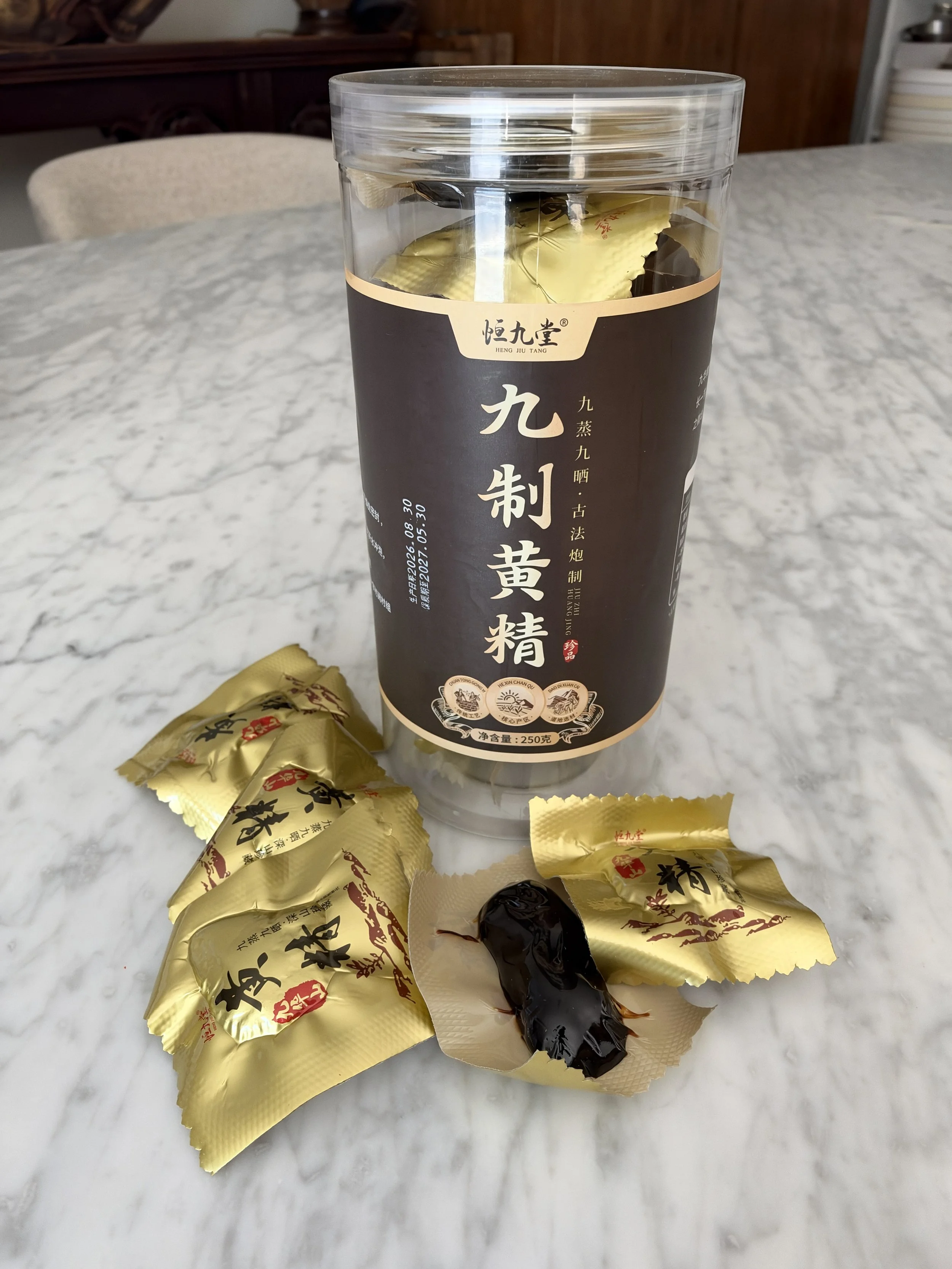 Image 1 of 2
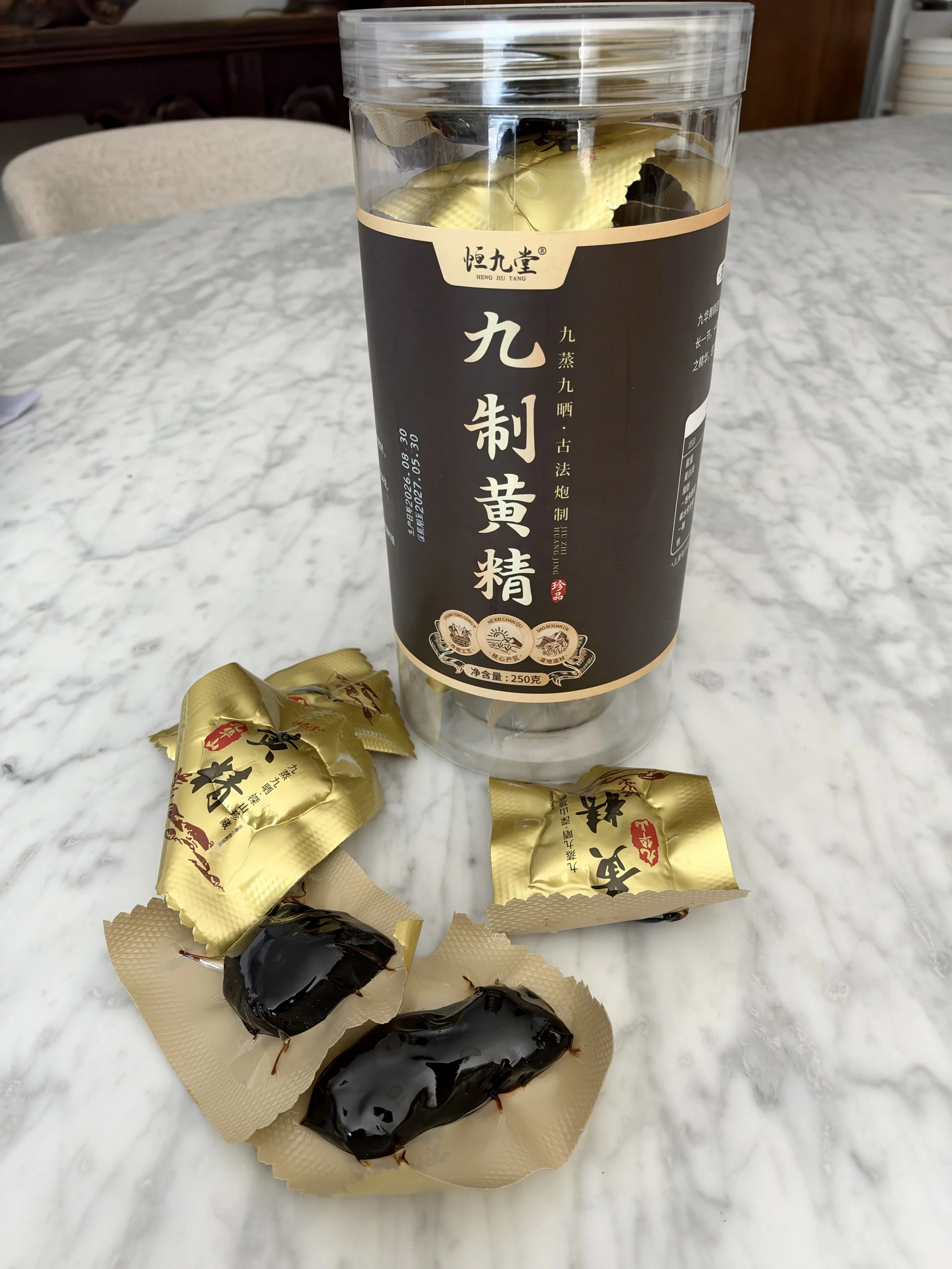 Image 2 of 2