黃連 (Huang Lian), commonly known as Coptis root, is one of the most intensely bitter and cooling herbs in the Chinese herbal materia medica. It has been used for centuries when the body shows signs of excess Heat, Fire, Damp-Heat, and toxicity.
In Traditional Chinese Medicine, Huang Lian is bitter and cold in nature. Its bitterness helps drain Dampness, while its cold nature helps clear excess Heat and Fire. It has a particular affinity for the digestive system and Heart, making it an important herb when excess Heat and Dampness have accumulated internally.
Key Actions
Key Indications
Huang Lian has traditionally been used to help with patterns involving excess Heat, Damp-Heat, Fire, and toxicity, particularly when affecting the digestive system.
It may help support:
Dysentery and diarrhea
Fever and excess internal Heat
Inflammation
Gastrointestinal inflammation and irritation
Digestive infections and microbial imbalance
Damp-Heat in the Stomach and Intestines
Healthy blood sugar and metabolic balance
Nausea and digestive upset
Excess thirst
Bitter taste in the mouth
The Gut + Huang Lian
One of Huang Lian's most prominent traditional uses is helping with Damp-Heat affecting the gastrointestinal system.
In Chinese medicine, Damp-Heat develops when Dampness and excess Heat combine within the body. Instead of fluids being properly transformed and transported, they become heavy and stagnant, creating an internal environment characterized by both moisture and Heat.
When Damp-Heat accumulates in the digestive system, it may present as digestive discomfort, loose or urgent stools, nausea, heaviness, a bitter taste in the mouth, excess thirst, and other signs of internal Heat.
Huang Lian's intensely bitter and cold nature makes it particularly suited to clearing this hot, damp, excess pattern.
It is especially noted for its naturally high berberine content, which contributes to its powerful antimicrobial and anti-inflammatory activity and has made Huang Lian particularly interesting in modern research involving the gastrointestinal system.
Naturally Rich in Berberine
Huang Lian is particularly well known for its naturally high concentration of berberine, the bright yellow plant compound that has become one of the most popular supplements in modern wellness.
Berberine is one of the primary active compounds responsible for Huang Lian's intensely bitter taste and has been widely studied for its antimicrobial, anti-inflammatory, digestive, and metabolic properties.
Long before berberine was isolated and sold as a supplement, however, Huang Lian had been used for centuries in Traditional Chinese Medicine to clear Heat, drain Dampness, sedate Fire, and resolve toxicity—particularly when Damp-Heat affects the gastrointestinal system.
From a TCM perspective, modern research into berberine provides an interesting parallel to Huang Lian's traditional use for Damp-Heat conditions involving inflammation, digestive disturbance, and excess internal Heat.
Rather than an isolated compound, Huang Lian provides berberine alongside the herb's naturally occurring spectrum of plant constituents, including coptisine, palmatine, epiberberine, and jatrorrhizine.
Huang Lian + Modern Research
The gastrointestinal system is one of the most interesting areas of modern Huang Lian and berberine research.
Berberine has relatively low systemic bioavailability when taken orally, meaning only a small amount reaches circulation unchanged. This has led researchers to investigate how berberine may exert important effects within the gastrointestinal tract itself, including through interactions with the intestinal environment and gut microbiome.
Modern research continues to explore Huang Lian, berberine, and its other naturally occurring alkaloids for their potential antimicrobial, anti-inflammatory, metabolic, and gastrointestinal effects.
This provides an interesting modern perspective on an herb that Chinese medicine has valued for centuries for clearing Heat, Dampness, Fire, and toxicity from the body.
黃連 (Huang Lian), commonly known as Coptis root, is one of the most intensely bitter and cooling herbs in the Chinese herbal materia medica. It has been used for centuries when the body shows signs of excess Heat, Fire, Damp-Heat, and toxicity.
In Traditional Chinese Medicine, Huang Lian is bitter and cold in nature. Its bitterness helps drain Dampness, while its cold nature helps clear excess Heat and Fire. It has a particular affinity for the digestive system and Heart, making it an important herb when excess Heat and Dampness have accumulated internally.
Key Actions
Key Indications
Huang Lian has traditionally been used to help with patterns involving excess Heat, Damp-Heat, Fire, and toxicity, particularly when affecting the digestive system.
It may help support:
Dysentery and diarrhea
Fever and excess internal Heat
Inflammation
Gastrointestinal inflammation and irritation
Digestive infections and microbial imbalance
Damp-Heat in the Stomach and Intestines
Healthy blood sugar and metabolic balance
Nausea and digestive upset
Excess thirst
Bitter taste in the mouth
The Gut + Huang Lian
One of Huang Lian's most prominent traditional uses is helping with Damp-Heat affecting the gastrointestinal system.
In Chinese medicine, Damp-Heat develops when Dampness and excess Heat combine within the body. Instead of fluids being properly transformed and transported, they become heavy and stagnant, creating an internal environment characterized by both moisture and Heat.
When Damp-Heat accumulates in the digestive system, it may present as digestive discomfort, loose or urgent stools, nausea, heaviness, a bitter taste in the mouth, excess thirst, and other signs of internal Heat.
Huang Lian's intensely bitter and cold nature makes it particularly suited to clearing this hot, damp, excess pattern.
It is especially noted for its naturally high berberine content, which contributes to its powerful antimicrobial and anti-inflammatory activity and has made Huang Lian particularly interesting in modern research involving the gastrointestinal system.
Naturally Rich in Berberine
Huang Lian is particularly well known for its naturally high concentration of berberine, the bright yellow plant compound that has become one of the most popular supplements in modern wellness.
Berberine is one of the primary active compounds responsible for Huang Lian's intensely bitter taste and has been widely studied for its antimicrobial, anti-inflammatory, digestive, and metabolic properties.
Long before berberine was isolated and sold as a supplement, however, Huang Lian had been used for centuries in Traditional Chinese Medicine to clear Heat, drain Dampness, sedate Fire, and resolve toxicity—particularly when Damp-Heat affects the gastrointestinal system.
From a TCM perspective, modern research into berberine provides an interesting parallel to Huang Lian's traditional use for Damp-Heat conditions involving inflammation, digestive disturbance, and excess internal Heat.
Rather than an isolated compound, Huang Lian provides berberine alongside the herb's naturally occurring spectrum of plant constituents, including coptisine, palmatine, epiberberine, and jatrorrhizine.
Huang Lian + Modern Research
The gastrointestinal system is one of the most interesting areas of modern Huang Lian and berberine research.
Berberine has relatively low systemic bioavailability when taken orally, meaning only a small amount reaches circulation unchanged. This has led researchers to investigate how berberine may exert important effects within the gastrointestinal tract itself, including through interactions with the intestinal environment and gut microbiome.
Modern research continues to explore Huang Lian, berberine, and its other naturally occurring alkaloids for their potential antimicrobial, anti-inflammatory, metabolic, and gastrointestinal effects.
This provides an interesting modern perspective on an herb that Chinese medicine has valued for centuries for clearing Heat, Dampness, Fire, and toxicity from the body.


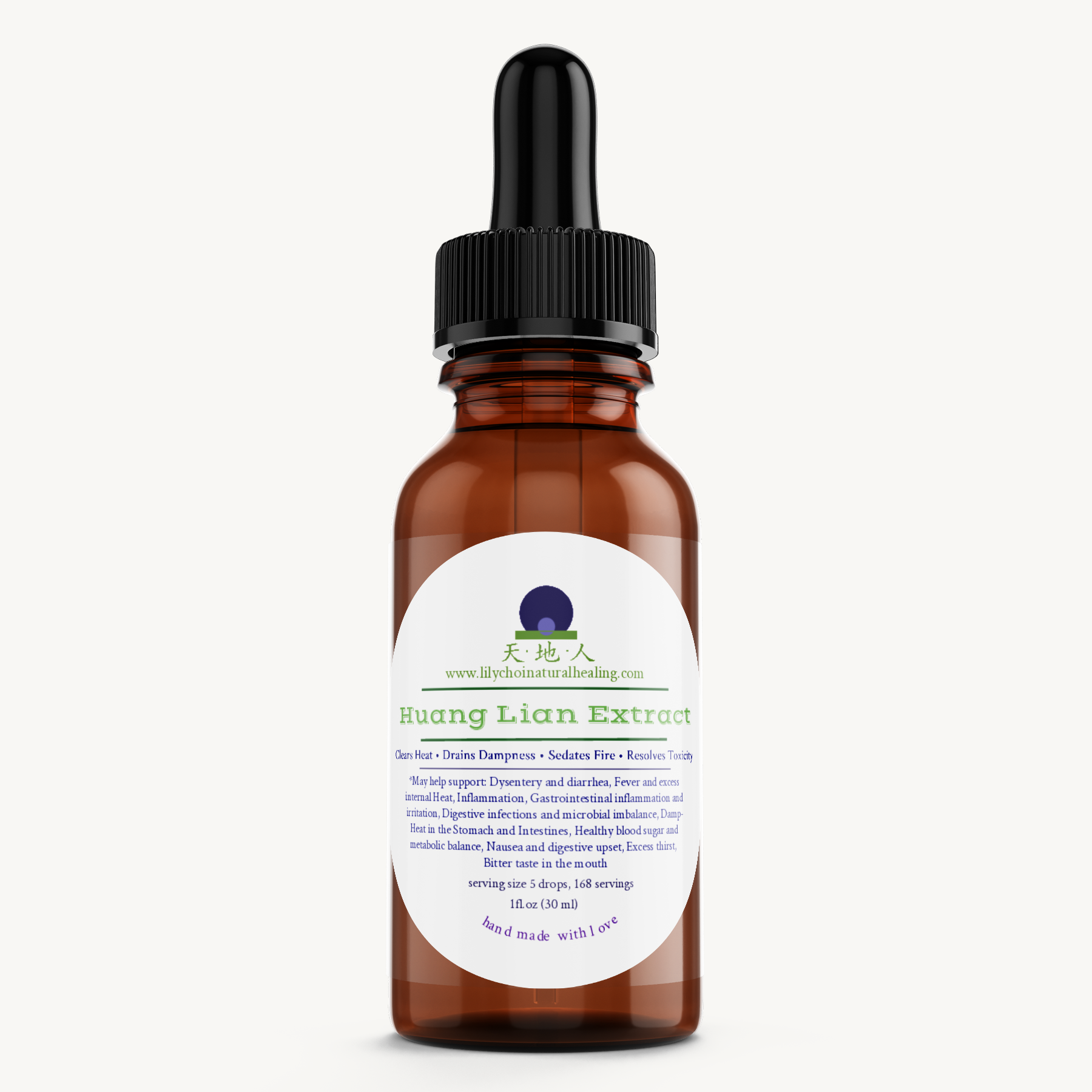 Image 1 of 2
 Image 2 of 2