Image 1 of 3
Image 2 of 3
Image 3 of 3
Insomnia 4
Insomnia IV. Harmonize Kidney and Heart
*Insomnia IV relieves symptoms of irritability, restlessness, severe continuous palpitations, cold feet, high blood sugar, loose stool, difficulty falling sleep. Great for those with diabetes, read here.
Insomnia IV. Harmonize Kidney and Heart
*Insomnia IV relieves symptoms of irritability, restlessness, severe continuous palpitations, cold feet, high blood sugar, loose stool, difficulty falling sleep. Great for those with diabetes, read here.
Directions: Take 1/2 dropper 2 hours before bed, daily.
Wildcrafted Ingredients: Huang Lian 黄连(Rhizoma Coptidis), Rou Gui 肉桂(Cortex Cinnamomi), Organic cane alcohol.
Expiration Date: 6 years
Alcohol Sensitivity or Breastfeeding: Place drops in 1 oz of warm water for 5–10 minutes to allow alcohol to evaporate before consuming.
Medication Timing: Separate use of herbal formulas and prescribed medications by at least 1 hour.
Consultation: Speak to your healthcare provider before using herbal formulas — especially if you’re breastfeeding, or planning to become pregnant. If you would like a 1:1 consultation with Dr. Choi, please visit the schedule page.
Pregnancy Warning: Do not use tinctures during pregnancy.
Allergy Notice: Do not use if allergic to alcohol or any of the herbs in the formula.
Purity & Quality: Vegan, gluten-free, soy-free, pesticide-free, chemical residue–free, and non-GMO.
* FDA Disclaimer: These statements have not been evaluated by the Food and Drug Administration. This product is not intended to diagnose, treat, cure, or prevent any disease.
Pairings
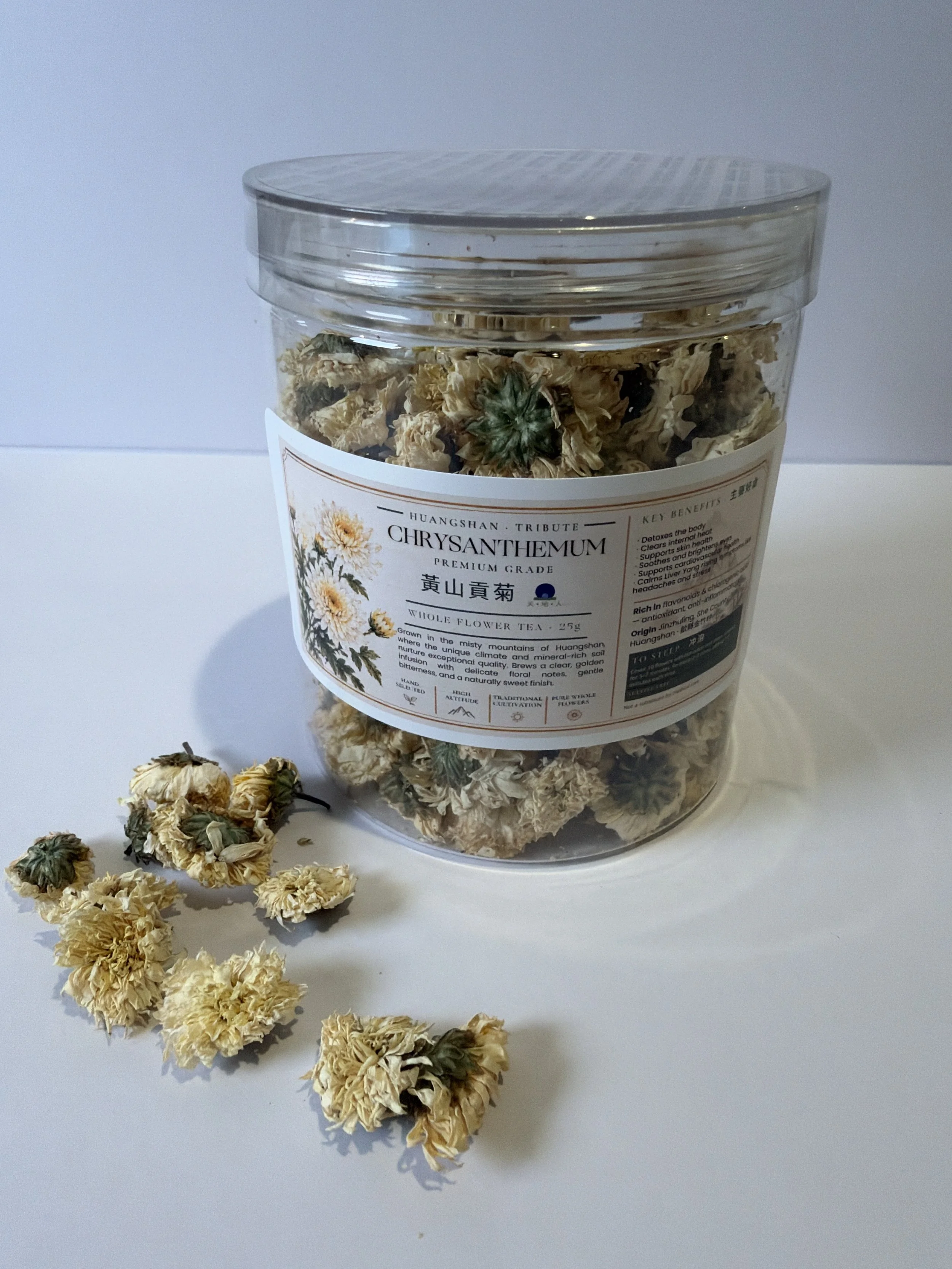
Huangshan Tribute Chrysanthemum | 黃山貢菊 | First-picked crop, more potency and benefits than other chrysanthemums.
Grown in the misty mountains of Huangshan, where the unique climate and mineral-rich soil nurture exceptional quality. These treasured whole flowers brew into a clear, golden infusion with delicate floral notes, gentle bitterness, and a naturally mild-sweet finish.
Rich in naturally occurring flavonoids and chlorogenic acid, compounds valued for their antioxidant properties.
Key Benefits
Traditional Chinese Medicine uses and potential wellness benefits
Clears Internal Heat — Cool excess Heat and disperse Wind-Heat.
Soothes & Brightens Eyes — Support tired, dry, and irritated eyes.
Calms Liver Yang — Used for patterns associated with headaches, dizziness, and irritability.
Supports Skin Wellness — Heat-related patterns affecting the skin like red, itchy eyes and acne.
Supports Natural Balance — Clears Heat and support the body's normal processes.
Provides Antioxidants — Contains flavonoids and phenolic compounds studied for their antioxidant activity.
The TCM Perspective
Chrysanthemum (菊花, Ju Hua) has been treasured in Traditional Chinese Medicine for centuries for its ability to clear Heat, disperse Wind-Heat, calm the Liver, and brighten the eyes.
Nature: Slightly Cold
Flavor: Mildy-sweet and Bitter
Meridians: Liver and Lung
Traditional Functions:
Calms the Liver & Brightens the Eyes
Used for red, swollen, irritated, or dry eyes, as well as blurred vision, dizziness, and headaches associated with Liver Heat or rising Liver Yang.
Clears Heat & Supports Detoxification
In TCM, chrysanthemum is used to clear Heat and toxins, particularly in patterns involving sore throats, skin eruptions, and inflammation-like symptoms.
Disperses Wind-Heat
Used in herbal preparations for early Wind-Heat patterns, including fever, headaches, and sore throats.
Nourishes Everyday Wellness
Huangshan Tribute Chrysanthemum is particularly prized for its mild, sweet flavor and use in supporting the eyes. It is also traditionally associated with benefiting the Lung system.
Origin & Exceptional Quality
Origin: Jinzhuling, She County, Huangshan, Anhui Province, China
Huangshan Tribute Chrysanthemum, known as Gong Ju (貢菊), is celebrated for its delicate fragrance, beautiful golden infusion, and naturally sweet finish.
The mountainous growing environment, with its cool nights, misty conditions, and distinctive soil, contributes to the character of these prized blossoms.
The flowers naturally contain flavonoids and chlorogenic acid, plant compounds studied for their antioxidant properties.
History & Heritage
Huangshan Tribute Chrysanthemum is recognized as one of China's Four Great Chrysanthemums, alongside Hang Ju, Chu Ju, and Bo Ju, Huangshan Tribute Chrysanthemum as the best medicinal one.
According to traditional accounts, chrysanthemum cultivation was introduced to the Huangshan region from Deqing, Zhejiang Province, during the Song Dynasty.
Local tradition also connects the flower's designation as a tribute chrysanthemum to a historical account of its use during an outbreak of eye disease in Beijing.
Today, Gong Ju remains treasured for its refined flavor, distinctive origin, and longstanding place in Chinese herbal culture.
You will receive a secure link to the file lasting 24 hours after the first download.
Get 15% off one tincture with the purchase of this ebook (discount applied automatically in cart)
All About Dampness: A Traditional Chinese Medicine Guide to Feeling Lighter, Clearer & More Energized
Have you ever felt heavy, bloated, foggy, sluggish, puffy, or simply “stuck”, even when everything seems normal on paper?
Traditional Chinese Medicine has a name for this internal environment: dampness.
Dampness is one of the most common patterns I see in modern life, yet most people have never been taught what it is or how deeply it can influence digestion, energy, weight, skin, mental clarity, circulation, and overall vitality.
In this beautifully illustrated 75-page digital guide, I take you inside the Traditional Chinese Medicine understanding of Dampness: how it develops, how to recognize it, and most importantly, the everyday practices that can help you strengthen your digestion and prevent Dampness from accumulating.
INSIDE THE GUIDE
You'll learn about:
What Dampness actually is and the many ways it can show up in the body
The Spleen + Stomach system and why strong digestion is at the heart of preventing Dampness
The Five Element framework and the relationship between Dampness and the Earth element
The everyday foods, habits, emotions, and environmental factors that can contribute to Dampness
How to strengthen your Spleen and stoke your digestive fire
Why warmth, regular meals, movement, sleep, and even your emotional state matter
Traditional practices including moxibustion, acupressure, gua sha, and abdominal massage
The foods I rely on most—including congee, bone broth, ginger, Job's Tears, and simple warming meals
Herbal support traditionally used for Dampness
My 20 digestive tips for putting these principles into practice every day
This isn't another cleanse, diet, or wellness trend.
It's about understanding your internal environment.
When you understand why your body becomes sluggish, heavy, or stagnant, you can begin making simple choices that support it at the root.
My hope is that once you understand dampness, you'll begin to see your body differently— and you'll carry this knowledge with you for the rest of your life.
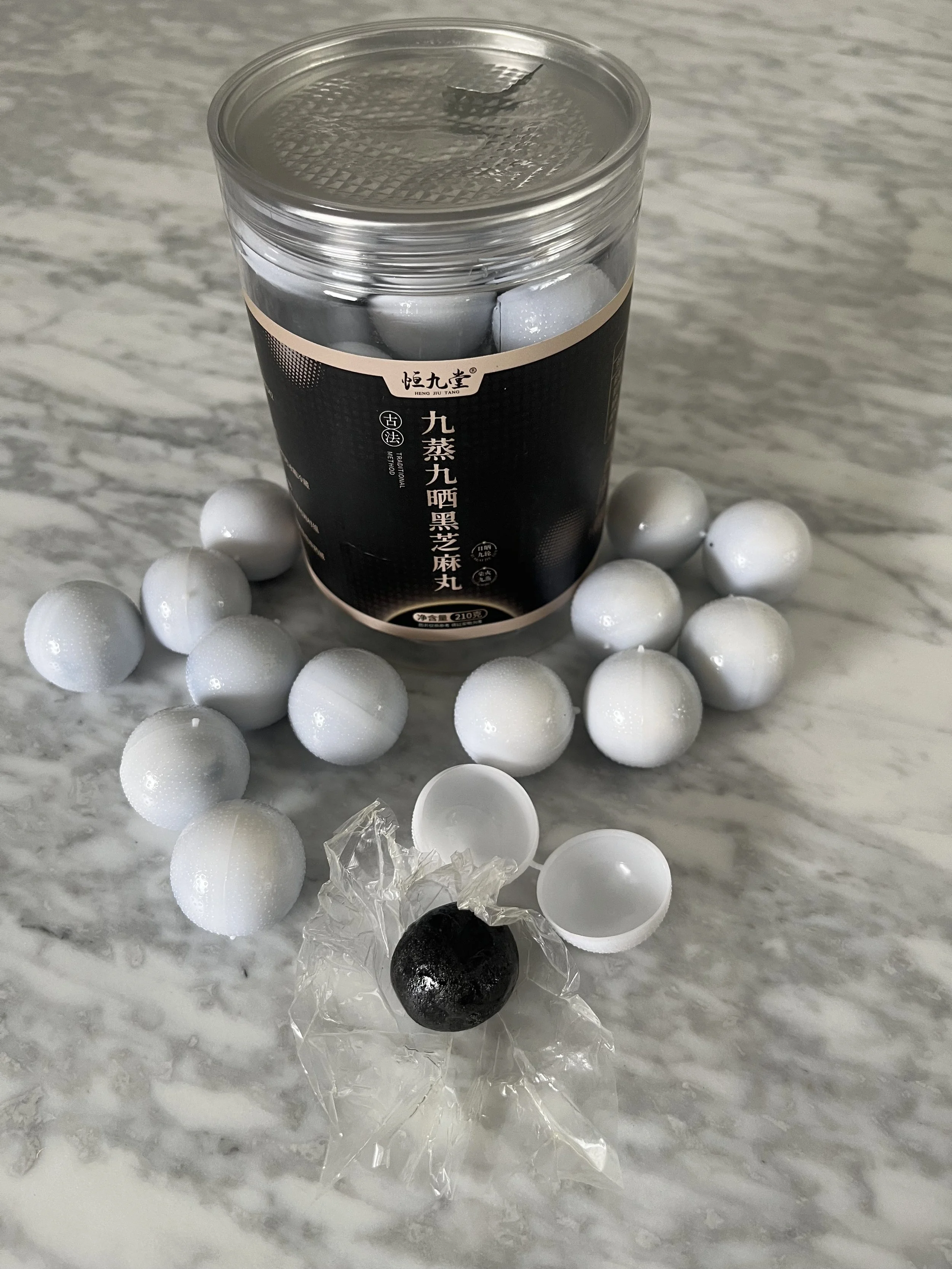
九蒸九晒 (nine times steamed, nine times dried) comes from classical Chinese herbal preparation methods used to transform the nature of an herb or food so it becomes safer, more absorbable, more deeply tonifying and less harsh on digestion. Many of my herbs in my tinctures are prepared this way. It is not common to find this preparation!
The nine-cycle process unlocks the essence. By the ninth cycle, the sesame becomes warming, deeply tonifying, and gentle on digestion. Steaming and drying nine times isn’t just symbolic— it’s alchemical. Each cycle:
• Breaks down tough fibers and anti-nutrients
• Makes minerals, oils, and Jing-building compounds far more absorbable
• Concentrates the life force of the seed
*Benefits:
Profound Kidney & Liver nourishment. The nine-cycle method allows it to tonify without clogging, which is crucial for long-term use. In Chinese medicine, black sesame enters the Kidney and Liver systems— the organs that govern:
• Aging & longevity
• Hair, teeth, bones, fertility
• Hormonal balance and willpower
Supports Blood, Yin, and Jing. This is why it’s traditionally used for graying hair, postpartum depletion, fatigue, constipation and low vitality. This preparation is famous for:
• Nourishing Blood (dry skin, dizziness, brittle nails)
• Replenishing Yin (dryness, heat signs, night waking)
• Protecting Jing (burnout, overwork, premature aging)
• Lubricating the Intestines (constipation, dry bowels)
Easier on the Spleen & digestion. Raw or improperly prepared sesame can be heavy. Nine-steamed sesame becomes silky, warming, and digestible, allowing nourishment to actually be assimilated.
The addition of black bean is key. Together, sesame + black bean form a classic longevity pairing. Black beans further:
• Strengthen Kidney Qi (aging, hair health, energy, fertility, hormones)
• Support adrenal energy
• Enhance detoxification and water metabolism
Shelf life: 6 months if stored in a cool, dry place. In hot weather, it can be refrigerated.
Ready to eat. Consume 1-2 per day. If you have heat symptoms have 1, if you have a cold Stomach, cold Kidneys, you can have up to 3.
Each container contains about 21 balls


寧夏中寧枸杞 | Gou Qi Zi | First-picked crop, twice the benefits of other goji berries.
Cultivated in the renowned Zhongning region of Ningxia, China, where generations of farmers have perfected the cultivation of one of Traditional Chinese Medicine's most treasured fruits. These premium-grade goji berries are prized for their naturally sweet flavor, vibrant red color, and exceptional nutritional profile.
Rich in naturally occurring carotenoids, including zeaxanthin, polysaccharides, and antioxidants, goji berries have been used for centuries to nourish Liver Blood, replenish Kidney Yin, and support healthy vision.
Key Benefits
Nourishes Liver Blood
Replenishes Kidney Yin & Jing
Supports Healthy Vision
Rich in Natural Antioxidants
Supports Skin & Healthy Aging
Supports Immune Function
The TCM Perspective
Goji berries (枸杞子, Gou Qi Zi) are among the most celebrated nourishing herbs in Traditional Chinese Medicine. Unlike strongly cooling or warming herbs, goji berries are valued for their gentle, nourishing properties and suitability for many everyday herbal preparations.
Nature: Neutral
Flavor: Sweet
Meridians: Liver, Kidney & Lung
Nourishes Liver Blood & Brightens the Eyes
In TCM, the Liver opens into the eyes, and the condition of our vision is closely connected to the nourishment of Liver Blood and Kidney Yin.
Goji berries are used for patterns associated with dry eyes, blurred vision, dizziness, and visual fatigue.
Their naturally occurring zeaxanthin is also of particular interest in modern nutritional research because this carotenoid accumulates in the retina and contributes to macular pigment.
Replenishes Kidney Yin & Supports Jing
The Kidneys are regarded as the foundation of our inherited vitality in Traditional Chinese Medicine, storing Jing, or Essence, which is associated with growth, reproduction, development, and aging.
Goji berries are traditionally used to nourish Kidney Yin and support patterns of deficiency associated with the lower back, knees, and overall vitality.
Nourishes the Skin & Supports Healthy Aging
In TCM, healthy skin depends on the proper nourishment and circulation of Blood and Body Fluids.
Goji berries are valued as a nourishing food for longevity and vitality. They also contain carotenoids and other plant compounds studied for their antioxidant activity.
Supports the Lungs & Body Fluids
Goji berries are also associated with the Lung meridian and are traditionally used in nourishing preparations for Lung Yin deficiency.
Their sweet, nourishing nature makes them a valued addition to soups, teas, and herbal foods intended to replenish Yin and support the body's fluids.
Origin & Exceptional Quality
Origin: Mingshashan Goji Berry Growing Region, Zhongning County, Zhongwei City, Ningxia, China
Quality Grade: 特优 — Premium Grade
Ingredients: 100% Dried Zhongning Goji Berries
Zhongning County, located in China's Ningxia Hui Autonomous Region, has a longstanding reputation for producing exceptional goji berries.
Its distinctive growing environment, characterized by abundant sunshine, dry conditions, and significant day-to-night temperature differences, has helped establish Zhongning as one of China's most recognized goji-growing regions.
The region is especially celebrated for producing berries with a naturally sweet flavor, vibrant color, and distinctive character.
These berries are identified by their producer as Premium Grade (特优), reflecting the manufacturer's quality classification.
Exceptional Quality
On January 10, 2017, the Ministry of Agriculture of the People's Republic of China officially approved the registration of "Zhongning Goji Berry" for protection under the Agricultural Product Geographical Indication system.
On November 15, 2019, it was included in the China Agricultural Brand Directory.
In April 2025, it received recognition as one of China's first batch of "Consumer Goods Brands" (中国消费名品).
History & Heritage
Goji berries have been treasured in Chinese herbal traditions for well over a thousand years.
Known as Gou Qi Zi (枸杞子), they appear in classical Chinese herbal literature and have long been associated with nourishing the Liver and Kidneys, replenishing Essence, and brightening the eyes.
In Chinese culture, goji berries are more than a simple dried fruit. They are a traditional food used in everyday nourishment, medicinal soups, herbal teas, and restorative preparations.
Their longstanding reputation as a longevity food reflects the Chinese medicine philosophy of nourishing the body consistently rather than waiting for imbalance to develop.
Zhongning goji berries have a cultivation history spanning more than 600 years. As early as the Ming Dynasty, they were recognized as tribute products presented to the imperial court. By the Qing Dynasty, their cultivation had already developed on a considerable scale.
Zhongning goji berries were originally known as Ning'an goji berries, a name derived from their place of origin around Ning'an Fort in Zhongning County.