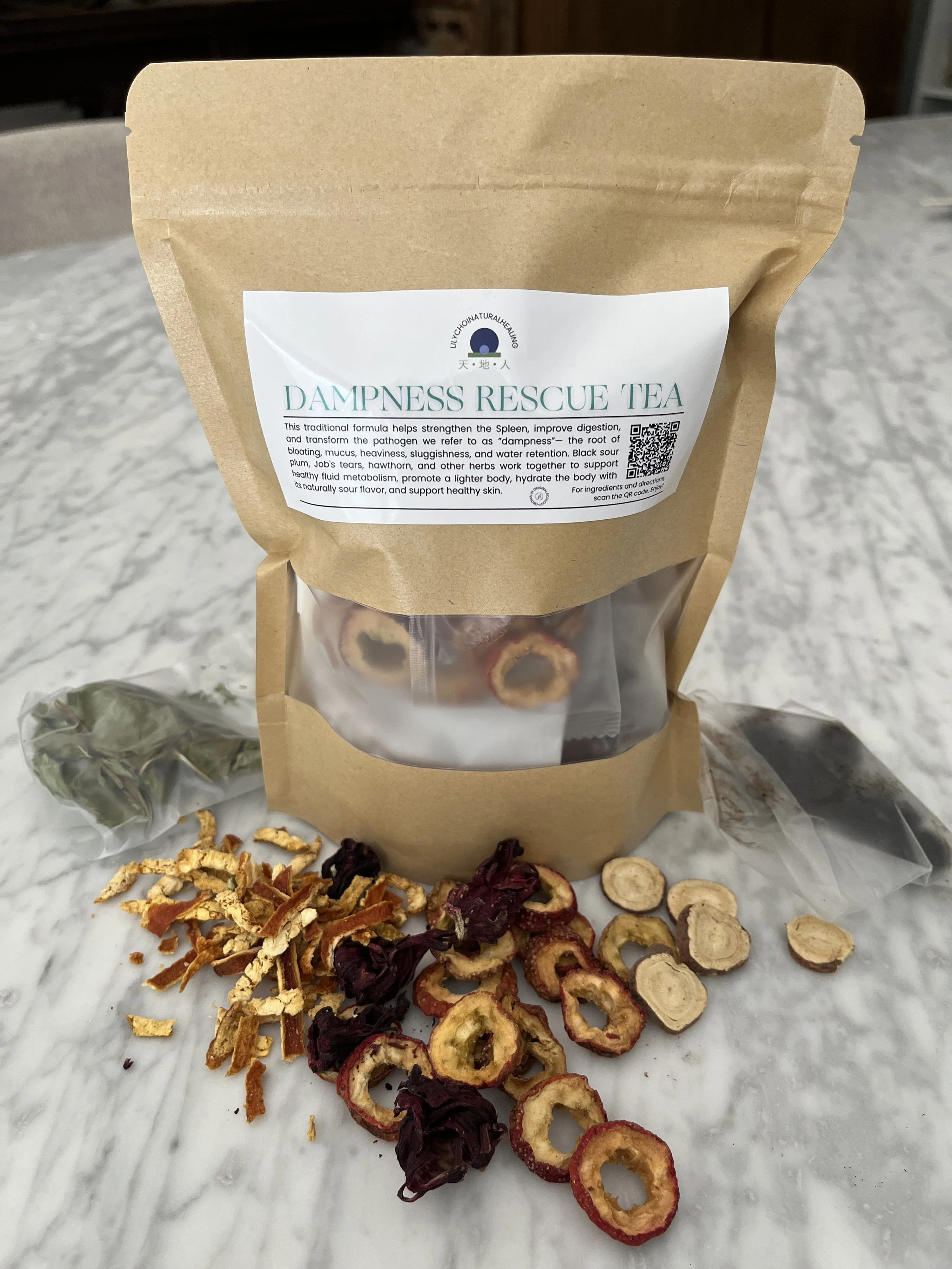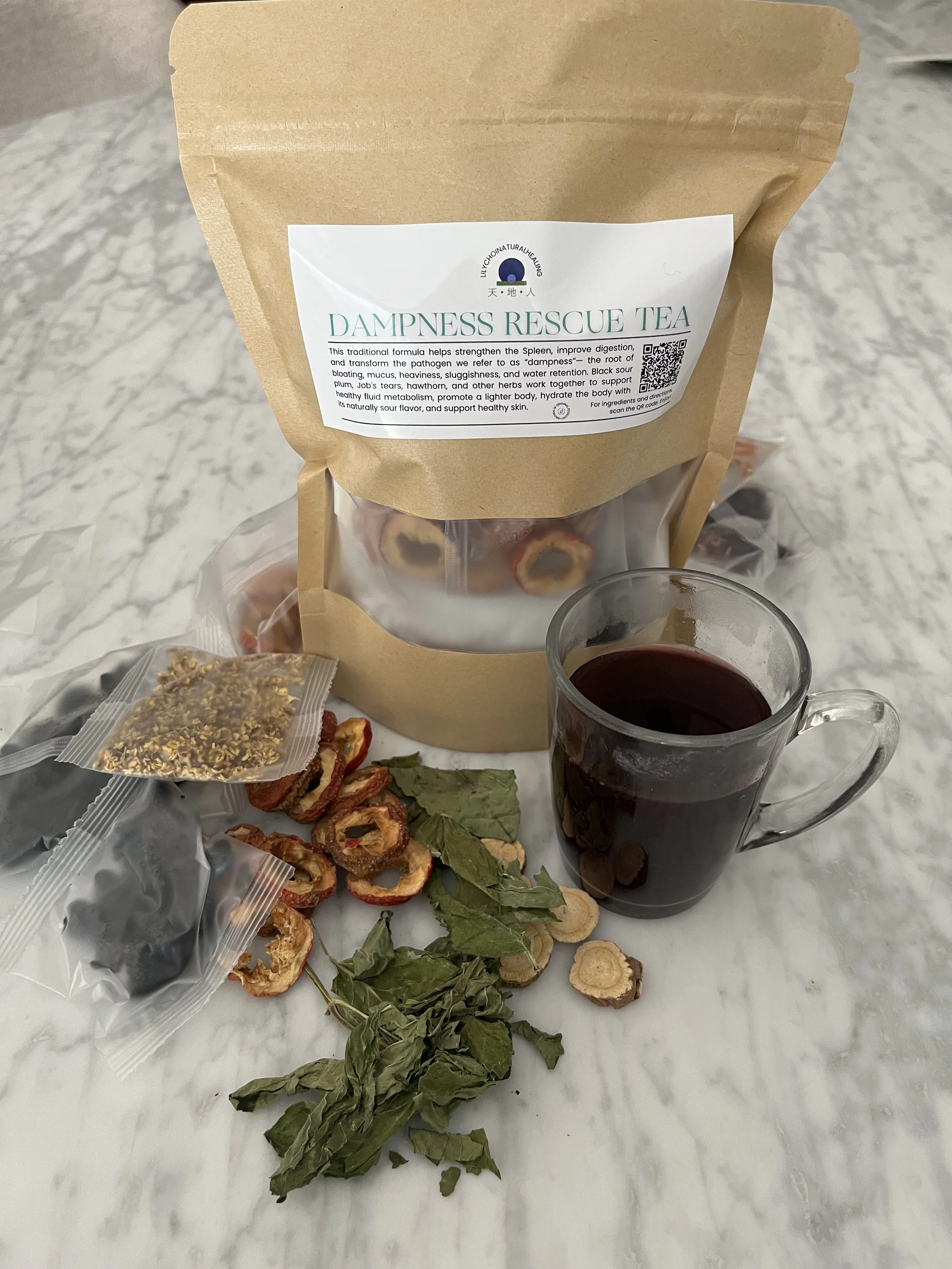
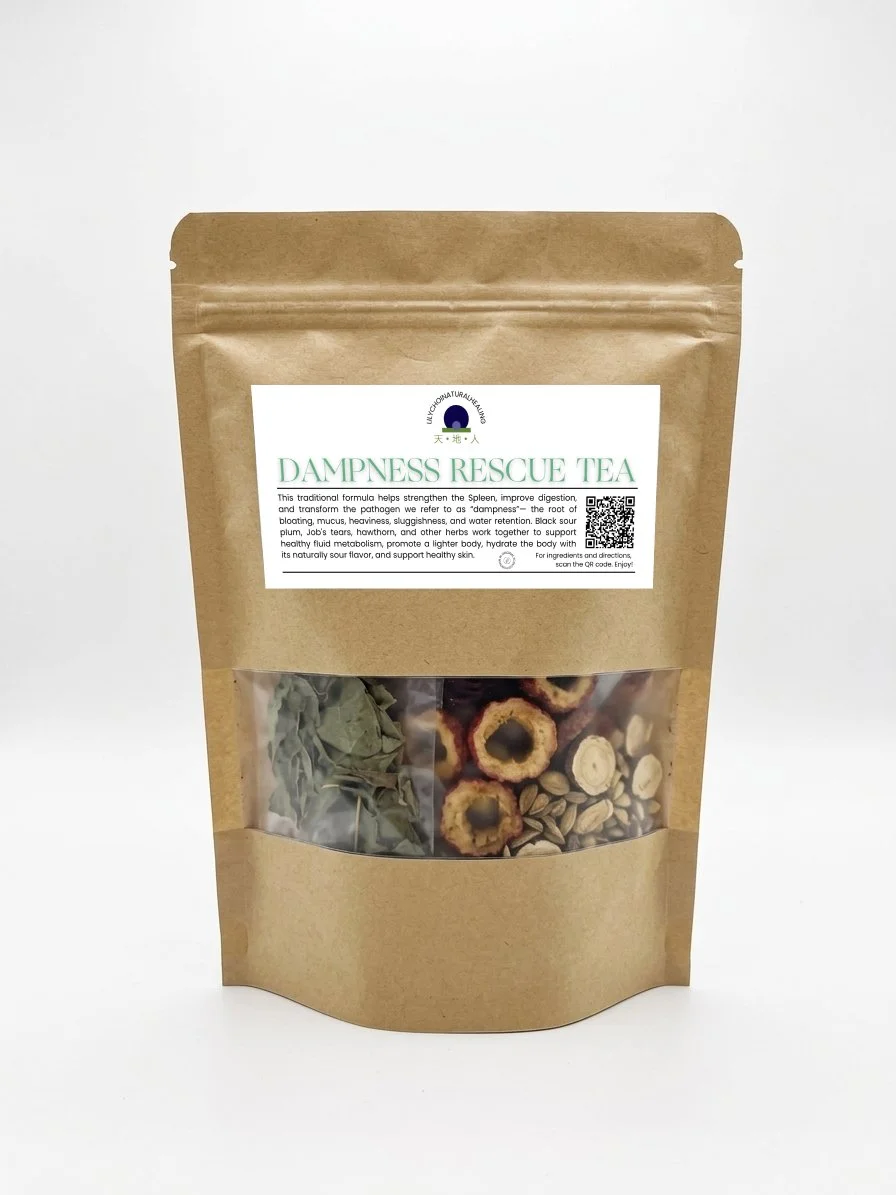
Dampness Rescue Tea

$35.00

Suan Mei Tang (Traditional Sour Plum Drink) is one of China's most beloved summer herbal beverages. This naturally sweet and tangy drink has been enjoyed for centuries to refresh the body during hot weather. Crafted with smoked sour plums, hawthorn, mulberries, orange peel, hibiscus, licorice, fragrant osmanthus flowers, red dates and cooling mint, it creates a beautifully balanced flavor that is both tart and refreshing. Simply simmer the herbs, and enjoy as a naturally flavorful drink throughout the summer months.

Ingredients

  • Dried Plums

  • Hawthorn Berries

  • Mulberries

  • Orange Peel

  • Hibiscus

  • Licorice Root

  • Osmanthus Flowers

  • Mint Leaves

  • Red dates

  • Job's Tears 薏仁

  • Poria 茯苓

  • Lotus leaf 荷葉

Net Weight: 95 g

Brewing Instructions

  1. Separate the herbs into two portions.

  2. Quickly rinse the ingredients with cool water to remove any surface dust. (Do not soak the osmanthus flowers.)

  3. Remove the pits from the red dates.

  4. Place the rinsed ingredients into a soup bag or tea filter and add approximately 5 cups of water to a non-reactive pot. Avoid using cast iron cookware, as the acidity of the plums may react with the iron and affect the flavor.

  5. Bring to a boil over high heat, then reduce to low heat and simmer for 40 minutes until about 2 cups remain.

  6. Turn off the heat. If you find the taste too sour, dilute it with more water or Chinese rock sugar. Add the Chinese rock sugar (optional) and the reserved osmanthus flowers. Stir until dissolved. Chinese rock sugar can be purchased online or at your local Asian market. If you don't have that you use can honey.

  7. Drink it warm or allow to cool to room temperature for a refreshing drink.

  8. To get the most out of your herbs, you can do a second boil. Add 3 cups of water and simmer until 1 cup remains.

Suan Mei Tang (Traditional Sour Plum Drink) is one of China's most beloved summer herbal beverages. This naturally sweet and tangy drink has been enjoyed for centuries to refresh the body during hot weather. Crafted with smoked sour plums, hawthorn, mulberries, orange peel, hibiscus, licorice, fragrant osmanthus flowers, red dates and cooling mint, it creates a beautifully balanced flavor that is both tart and refreshing. Simply simmer the herbs, and enjoy as a naturally flavorful drink throughout the summer months.

Ingredients

  • Dried Plums

  • Hawthorn Berries

  • Mulberries

  • Orange Peel

  • Hibiscus

  • Licorice Root

  • Osmanthus Flowers

  • Mint Leaves

  • Red dates

  • Job's Tears 薏仁

  • Poria 茯苓

  • Lotus leaf 荷葉

Net Weight: 95 g

Brewing Instructions

  1. Separate the herbs into two portions.

  2. Quickly rinse the ingredients with cool water to remove any surface dust. (Do not soak the osmanthus flowers.)

  3. Remove the pits from the red dates.

  4. Place the rinsed ingredients into a soup bag or tea filter and add approximately 5 cups of water to a non-reactive pot. Avoid using cast iron cookware, as the acidity of the plums may react with the iron and affect the flavor.

  5. Bring to a boil over high heat, then reduce to low heat and simmer for 40 minutes until about 2 cups remain.

  6. Turn off the heat. If you find the taste too sour, dilute it with more water or Chinese rock sugar. Add the Chinese rock sugar (optional) and the reserved osmanthus flowers. Stir until dissolved. Chinese rock sugar can be purchased online or at your local Asian market. If you don't have that you use can honey.

  7. Drink it warm or allow to cool to room temperature for a refreshing drink.

  8. To get the most out of your herbs, you can do a second boil. Add 3 cups of water and simmer until 1 cup remains.

How to Brew

  • Use 2g of tea

  • Add water just off the boil (95°C+)

  • Steep for 10 minutes

  • Don’t toss the leaves after one cup, you can re-steep them 3 to 4 times.

GROWN IN ORIGINAL ECOLOGY

THIS TEA IS GROWN WITHOUT SYNTHETIC PESTICIDES, HERBICIDES, OR FERTILIZERS. CULTIVATED USING NATURAL METHODS THAT SUPPORT BIODIVERSITY AND CONSERVE SOIL AND WATER, IT GROWS SYMBIOTICALLY WITH NATIVE PLANTS IN A BALANCED ECOSYSTEM. THE RESULT IS A TEA ROOTED IN ITS NATURAL ENVIRONMENT, WITH INTEGRITY PRESERVED FROM LEAF TO CUP.